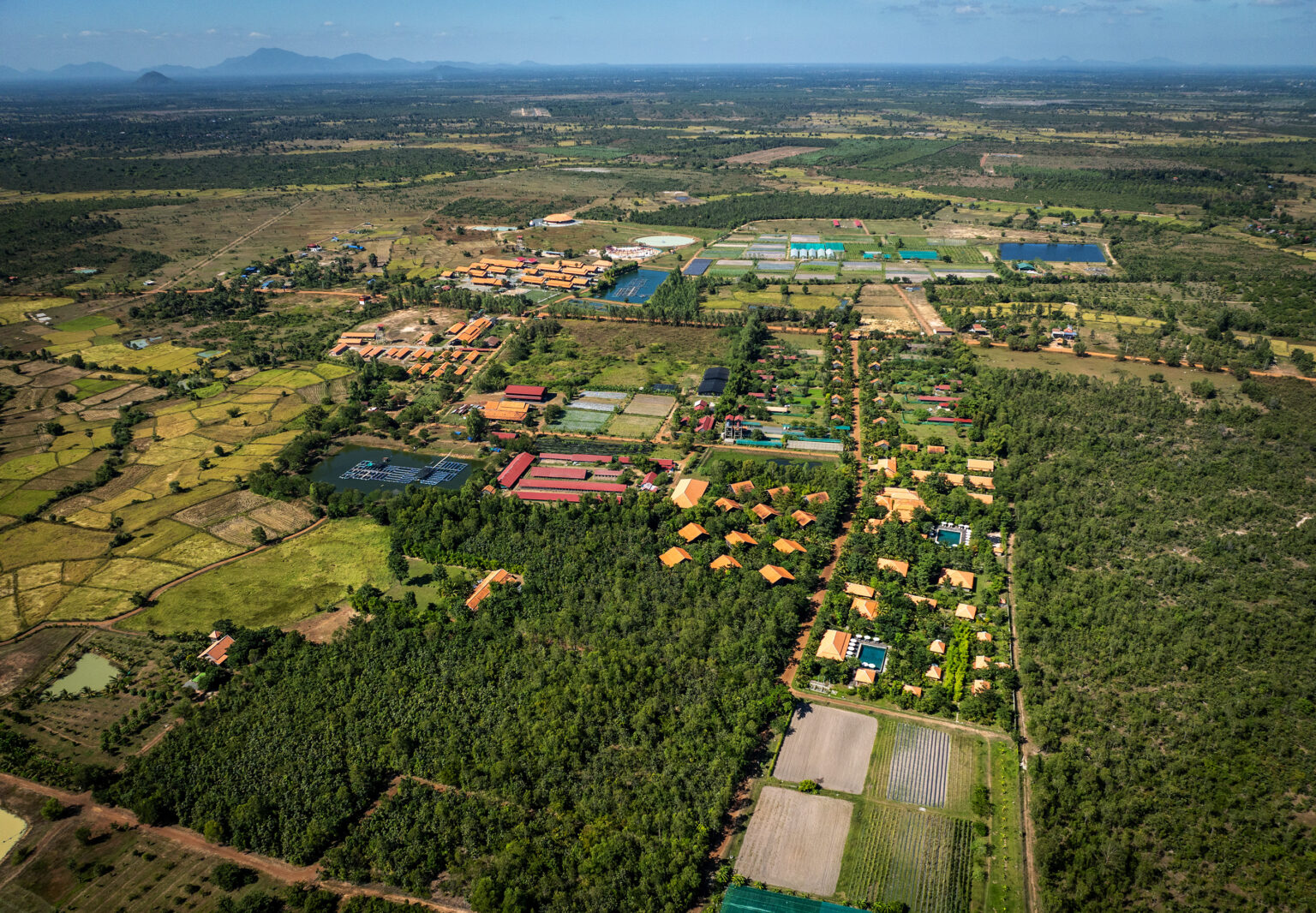
Aerial View of the Smiling Gecko project in Kampong Chhnang, Cambodia
Smiling Gecko is a 150-hectares social project located in Kampong Chhnang, about an hour’s drive from Phnom Penh – the capital of Cambodia. The brainchild of Swiss celebrity photographer and humanitarian Hannes Schmid and co-founded with Cambodian lawyer Sokleap NG, the project was founded in 2014 on 9 hectares to re-home 12 families rescued from decrepit conditions in infamous dump sites.
With the determination of the founders, relentless hard work of the team and generous support from donors, the project has grown significantly to become a sustainable community where families live, work and play – where children receive good education and nutrition to have a better shot at life, and local villagers are provided with vocational training and better employment opportunities for them to break from the vicious cycle of poverty and helplessness.
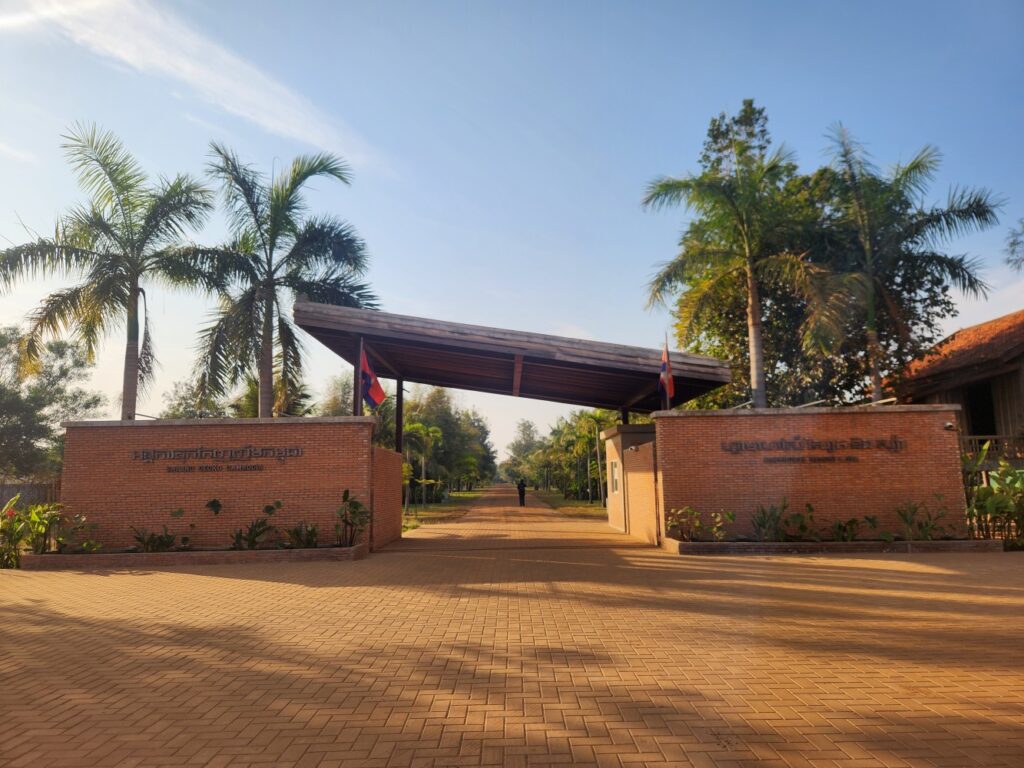
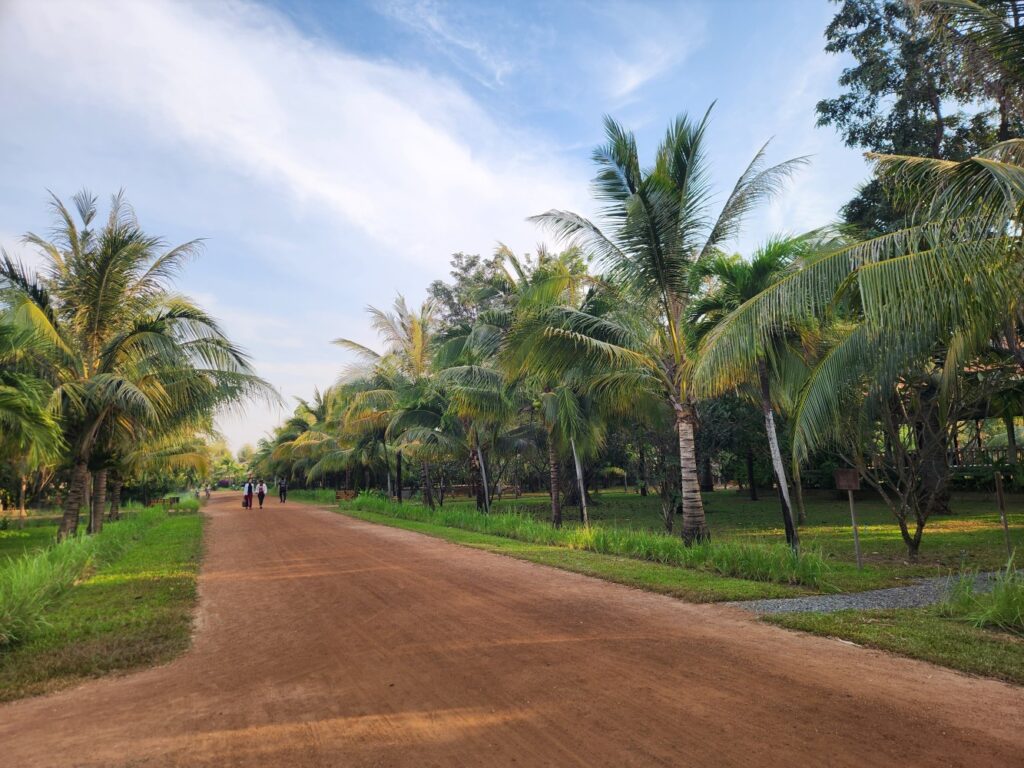
Entrance to Smiling Gecko Cambodia, Kampong Chhnang (taken by Shyn Yee Ho-Strangas)
The Smiling Gecko School
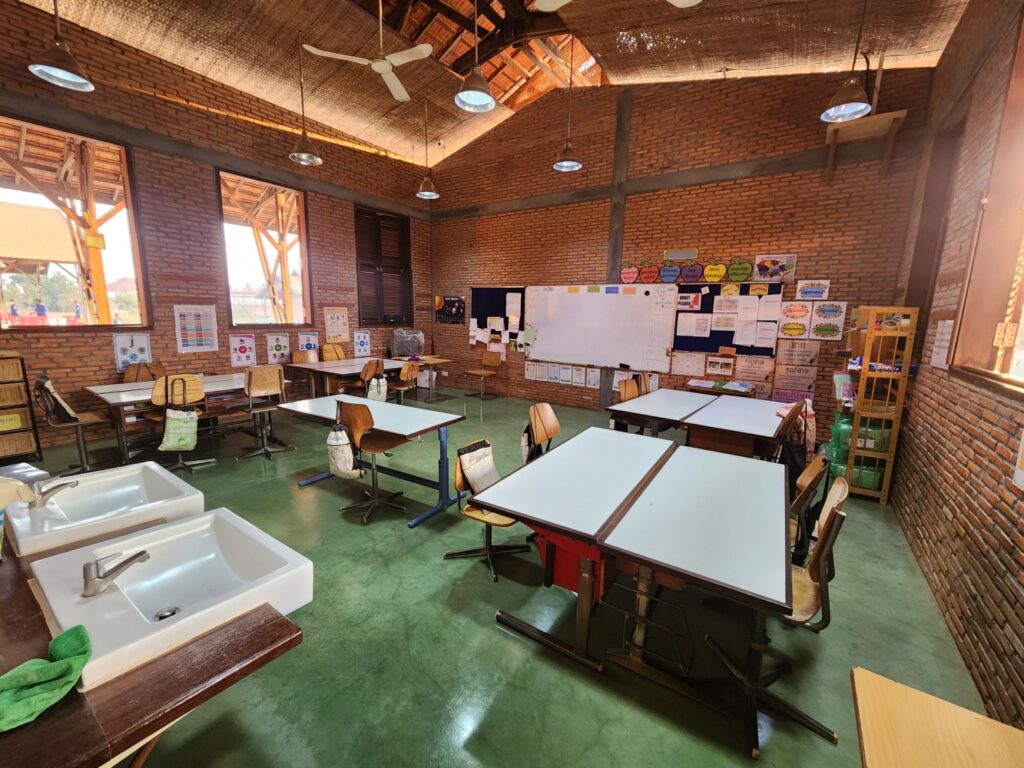
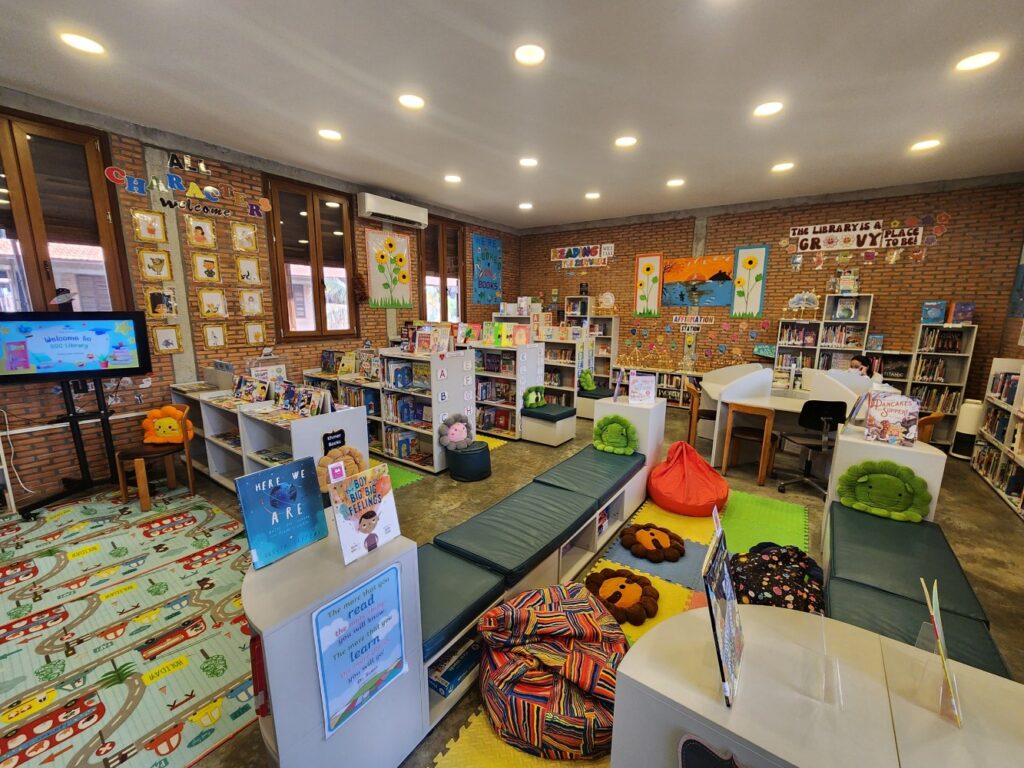
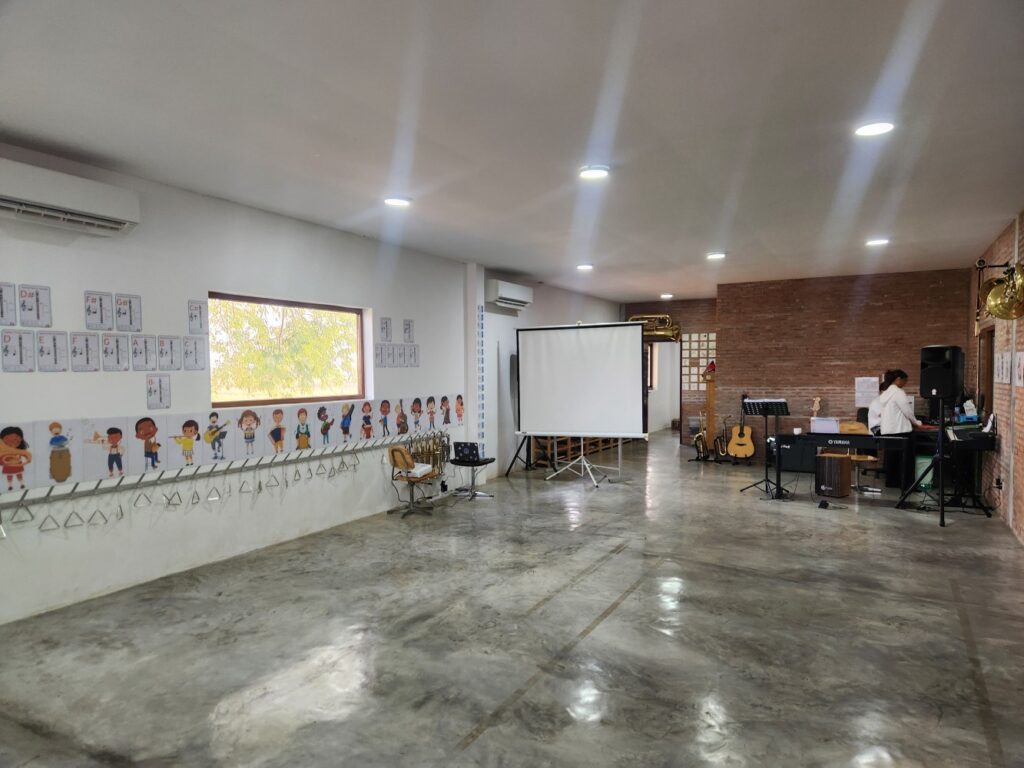
Core to the project is a school that provides good quality primary education to more than 500 children aged between 4 and 13 from the vicinity. Due to space constraints, the school is only able to accept one child per family and families are screened carefully to ensure better rates of success for the children. Each class is led by a qualified teacher and supported by a local teacher (great for upskilling and continuity); the curriculum adheres to local requirements and is augmented with English lessons conducted by native speakers. There is a quaint little library and music classroom filled with pre-loved books and music instruments donated from around the world.
Inside a typical classroom furnished with 2nd hand furniture donated by Swiss schools (taken by Shyn Yee Ho-Strangas)
I witnessed the children arrive at 5:30am in their casual clothes and misfitting footwear (crocs look-a-likes are very de rigeur!), change into their school uniforms which are washed daily on-site in industrial sized washing machines, shower themselves, get de-loused, get fed with a balanced breakfast, line up for teeth brushing and hustle to the common square for the morning flag-raising ceremony. It is all a very peaceful and orderly affair, with smiles and giggles all around. The children are eager to wave, exchange fist bumps and practise their English with a chirpy “good morning! how are you?”. The more adventurous ones would ask for your age, and then be shocked when you respond. I suppose 44 sounds really old to a 6 year old!
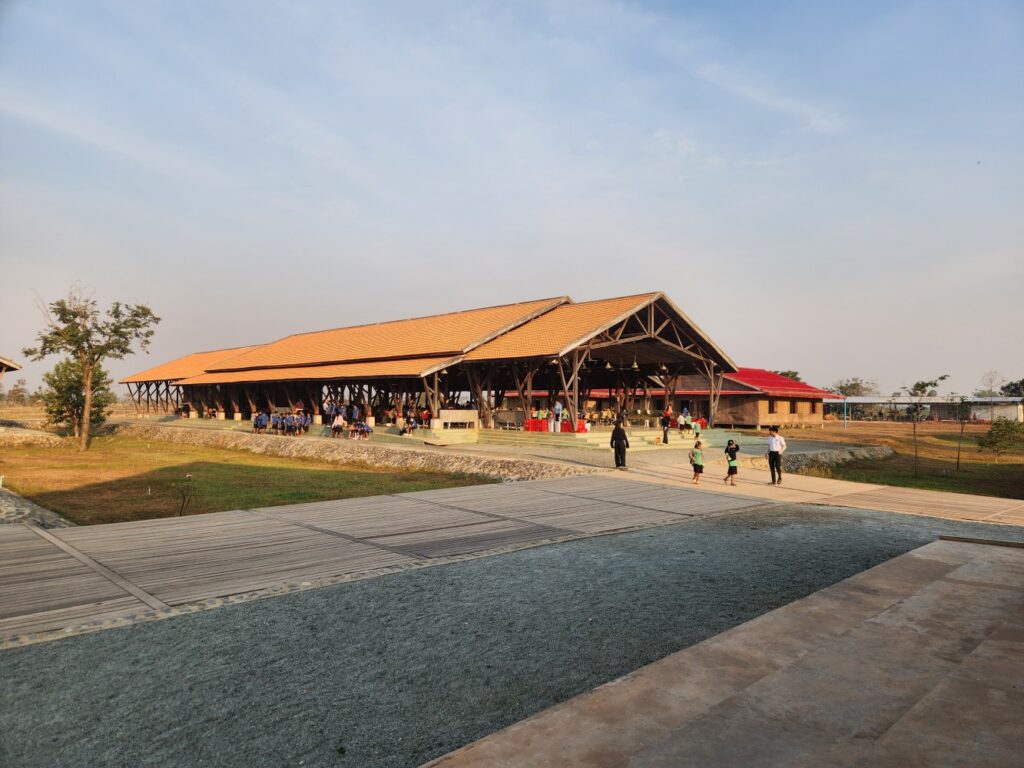
The School Canteen that provides two meals per day to more than 500 children every day. (taken by Shyn Yee Ho-Strangas)
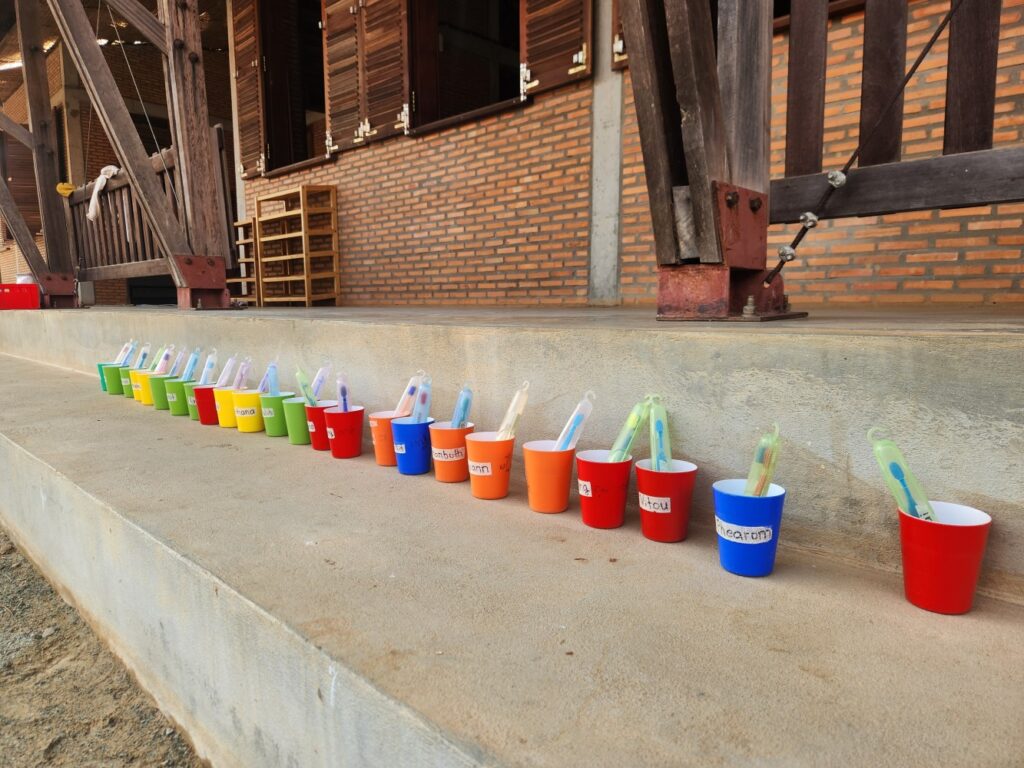
Dental care is almost non existent in rural Cambodia, and this is a real problem for children's heath. (taken by Shyn Yee Ho-Strangas)
The bright and colourful one-room library filled with pre-loved books. I'm a fan of the affirmation wall. (taken by Shyn Yee Ho-Strangas)
Music lessons are a real highlight for the children, where they sing and tinkle with instruments. (taken by Shyn Yee Ho-Strangas)
What is truly remarkable is also what has been developed in the rest of the project. Apart from the impressive school, there are some other noteworthy components, such as (more pictures can be found at the bottom of this article):
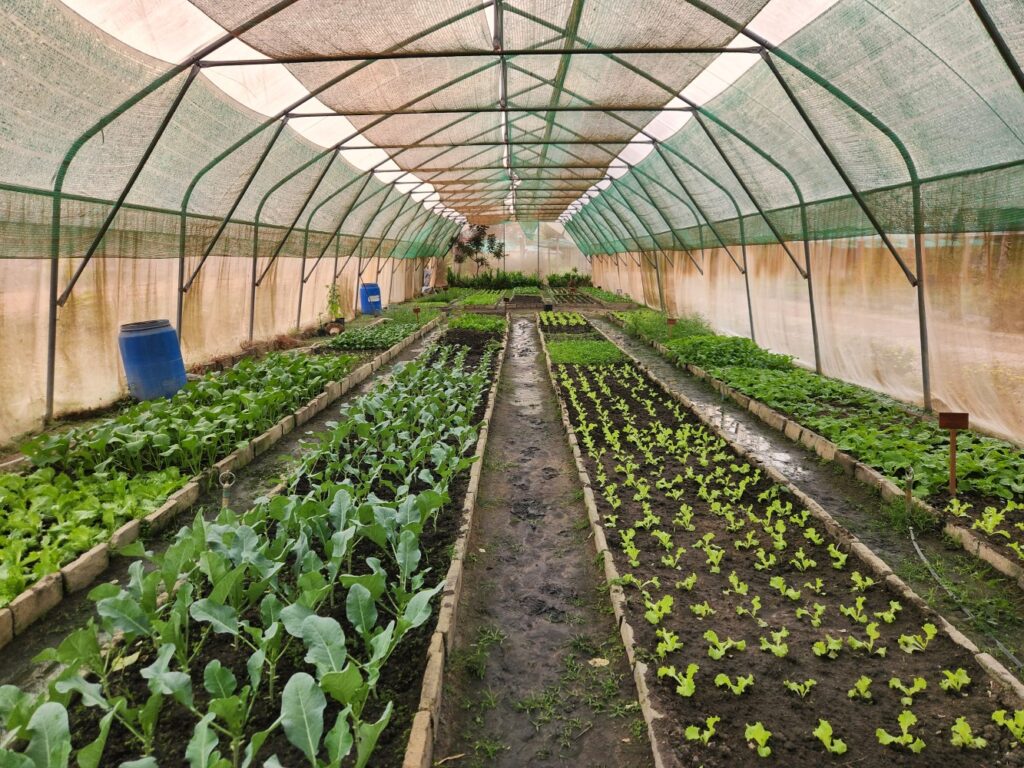
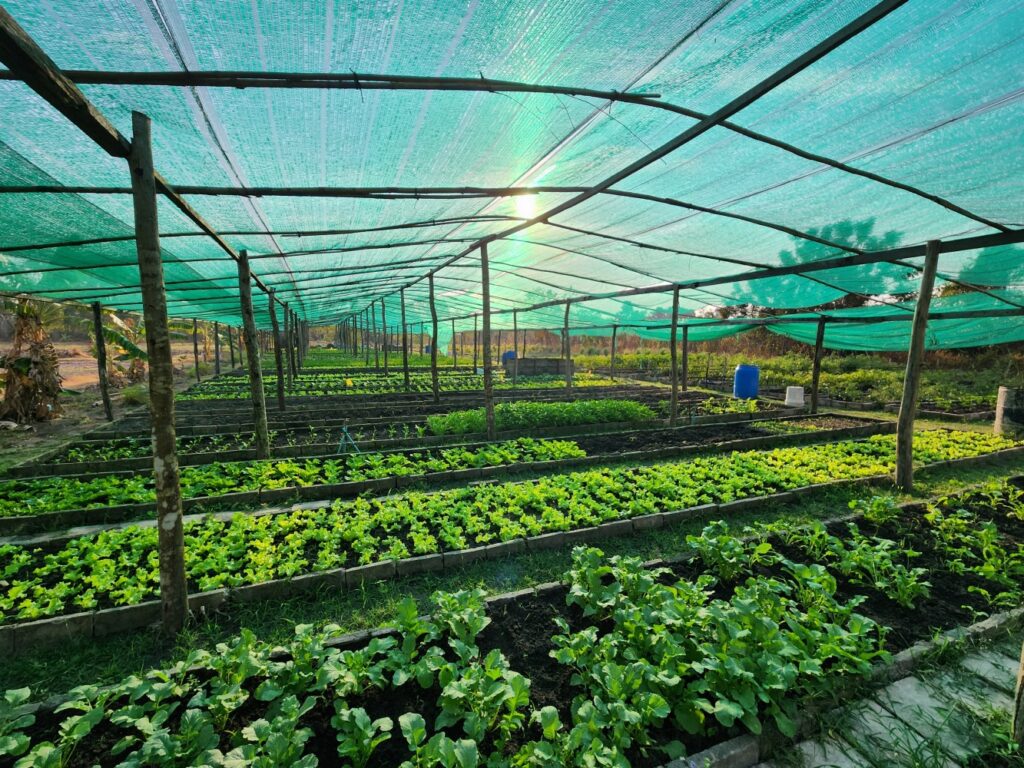
organic vegetable farms that grows bitter melon, mangoes, eggplants and more than 30 other types of fruits and vegetables in fields and greenhouses. The fresh produce is used to feed the children and employees, while surpluses are sold to other hotels and restaurants for income generation;
chicken farms where chickens are bred on a large scale for the project’s internal needs and income generation;
fish farms for internal and external rearing, producing around 20 tons of ready-to-eat fish for the project’s kitchens and domestic marketing;
experimental farms where vanilla bean farming is being trialed and herbs are grown for traditional Chinese medicine;
composting and waste management infrastructure so that the project is self sustaining and extremely low waste;
a carpentry workshop where local craftsmen trained on Swiss donated machines build furniture used in the project such as doors, windows, tables, chairs and beds; and
a metallurgy workshop which supports the constant construction needs of the project.
I would like to call out two specific components that really resonate with me – one being The Farmhouse Resort & Spa, a 34-key boutique resort, and The Gong, the only designated arts and culture venue in the whole of Cambodia.
The Farmhouse Resort & Spa
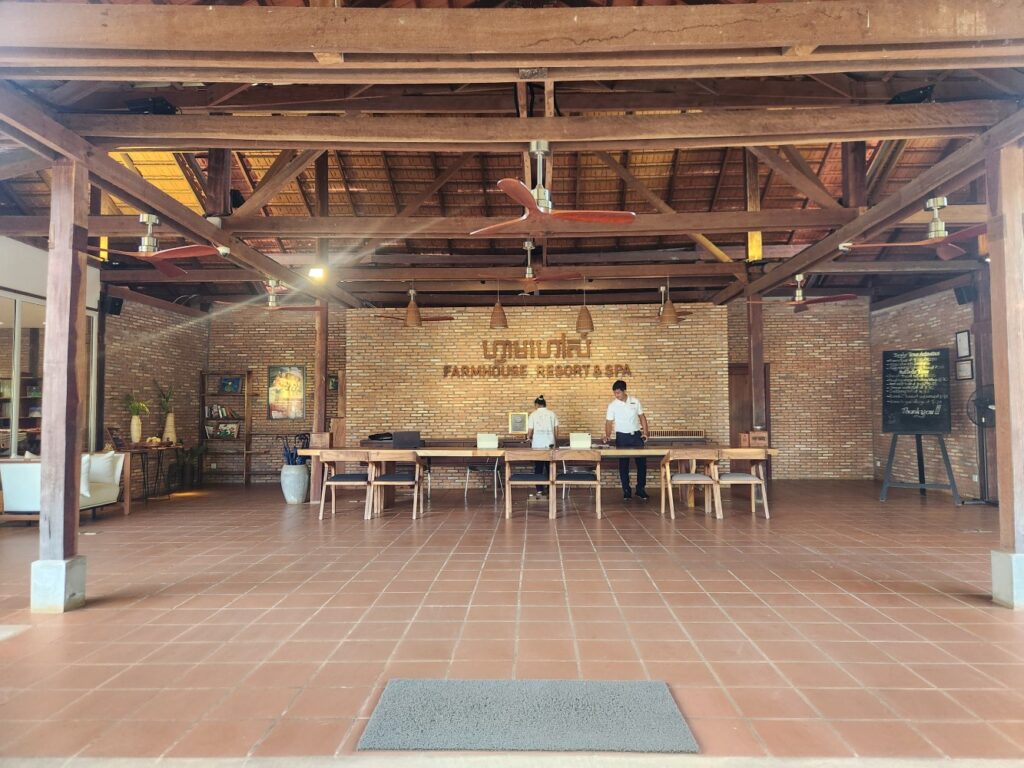
Arrival Lounge at the Farmhouse Resort & Spa (taken by Shyn Yee Ho-Strangas)
The Farmhouse Resort & Spa features 34 rooms in 17 purpose-built villas designed in traditional Khmer style and surrounded by lush foliage such as frangipani and fruit trees. There is also an all-day dining restaurant serving local cuisine and international fare, Restaurant Un – one of few fine-dining restaurants in the country helmed by the spectacular and talented Chef Mariya Un Noun (who herself was a beneficiary of the project), an award-winning Sanctuary Spa, a family pool, an adults-only pool and a well-equipped gym.
Tranquility at the Farmhouse Resort & Spa (taken by Shyn Yee Ho-Strangas)
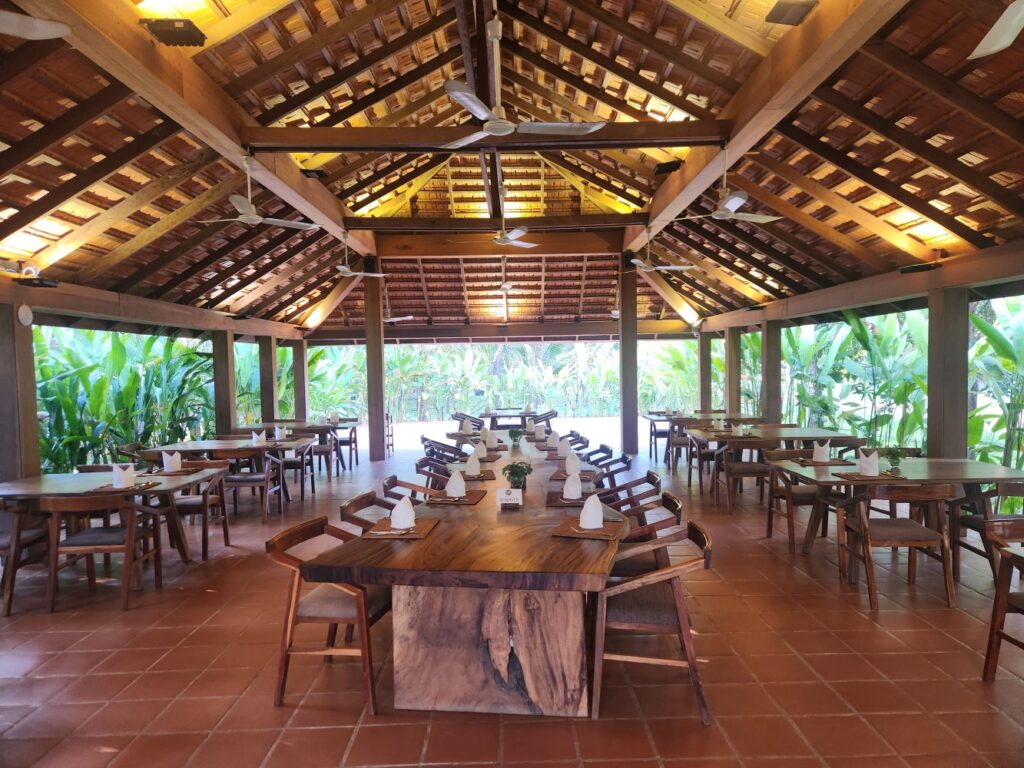
The All-Day Dining Restaurant (all furniture made in-house at the carpentry workshop!) (taken by Shyn Yee Ho-Strangas)
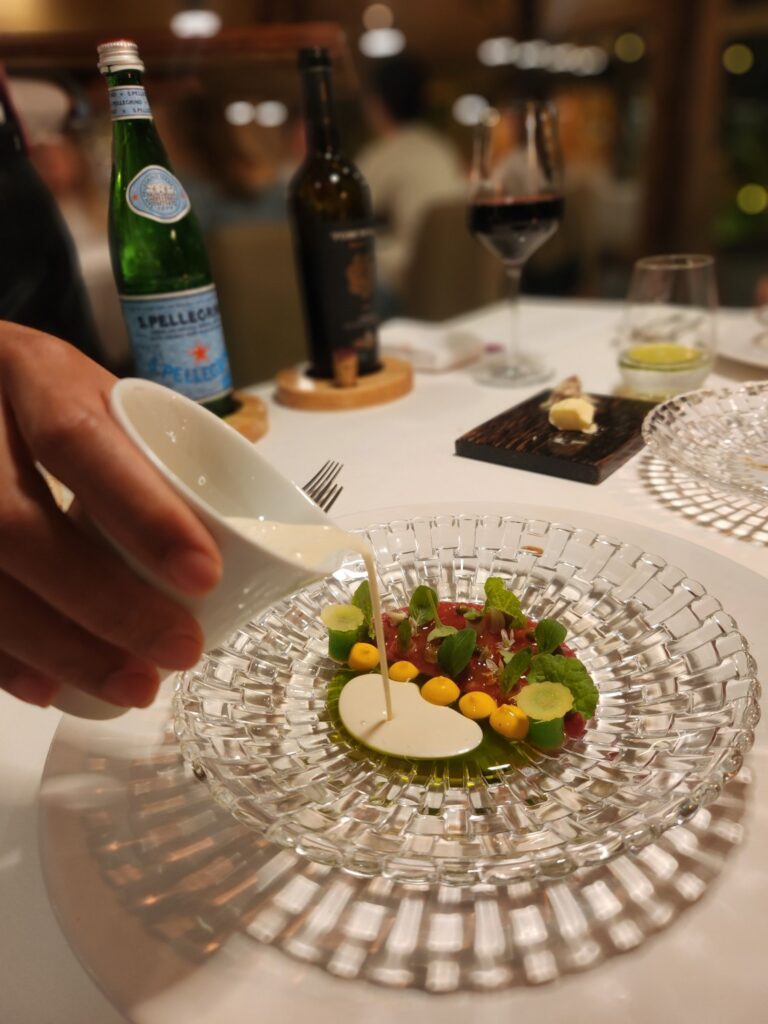
Fine dining at Restaurant Un, helmed by Chef Mariya Un Noun - the freshly made bread is to die for. (taken by Shyn Yee Ho-Strangas)
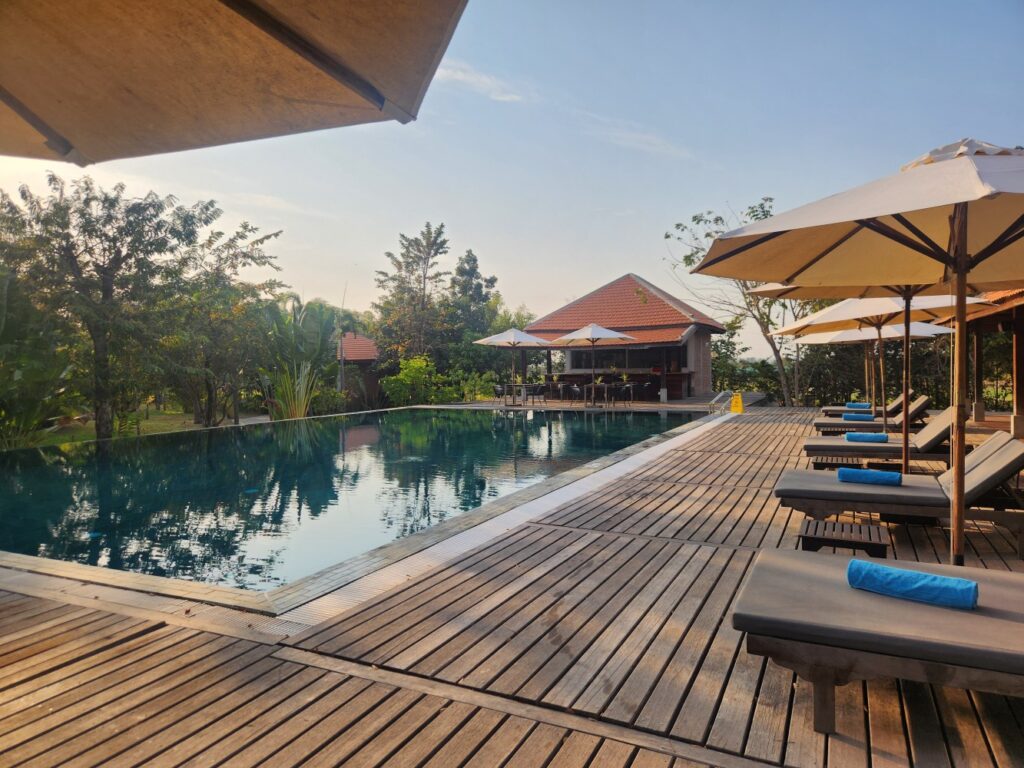
The Adults-Only Pool for some serious lapping or chilling with a good book (taken by Shyn Yee Ho-Strangas)
How does a boutique resort contribute to a social project like Smiling Gecko, you may ask? Can luxury travel fit in a landscape of poverty? The answer is, absolutely yes.
This is a model quite commonly used in emerging destinations like Cambodia, Laos, Philippines, Indonesia where higher-end tourism brings much needed tourism spend with less footprint, higher value employment opportunities, and the chance for these locales to showcase local hospitality and natural beauty that are otherwise frequently overlooked. The key, however, is to make the property and the stay experiences respectful to local design and cultures, and sustainable for the community and the environment in the long run. Profits generated from the resort can then be channeled into further training or to the rest of the project.
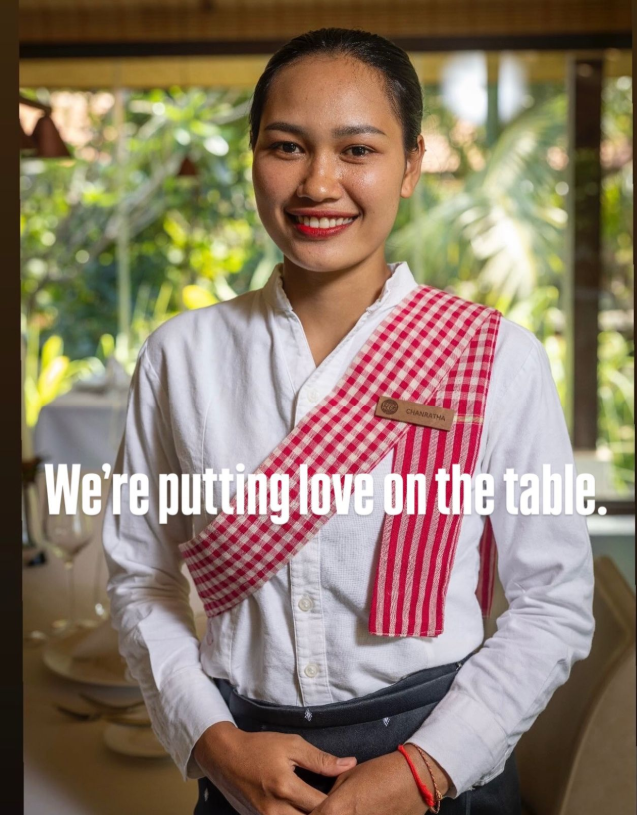
During my dining experience at Restaurant Un, for example, we were served by Chanratha – a delightful lady who, prior to joining Smiling Gecko, had worked only under minimum wages and dire conditions in garment factories. In two very short years at the project, she has learnt to speak English, and the art of hospitality and service, thus significantly altering the course of her and her family’s lives. She now has a vocational skill that will allow her to seek further employment and a career path within and outside of The Farmhouse. Her ability to open a wine bottle adeptly and pour into glasses (without drip!) surpasses many servers I have come across in Singapore.
The very lovely Chanratha at Restaurant Un
Responsible travel that gives back to the community in impactful ways is, to me, a win-win for all. Travelers and guests get a great holiday while knowing that their money goes towards uplifting livelihoods and children’s education – what’s not to like?
The Gong
For those who may be unfamiliar with the history of Cambodia, the dark years under the Khmer Rouge regime led by Pol Pot (1975-1979) claimed the lives of up to 2 million people. Declaring that the nation would start again at “Year Zero”, Pol Pot isolated his people from the rest of the world and set about emptying the cities, abolishing money, private property and religion, and setting up rural collectives. Anyone thought to be an intellectual of any sort was killed. Often people were condemned for wearing glasses or knowing a foreign language. Millions of people from the cities were forced to work on communal farms in the countryside, and intellectuals and artists were persecuted. Whole families died from execution, starvation, disease and overwork. (BBC, Nov 2018)
During this period of time, almost all artists, musicians and performers were executed, wiping out expertise and any collective knowledge of cultural history. Imagine not knowing how traditional instruments are meant to be played, or how local art can be replicated, taught and learnt.
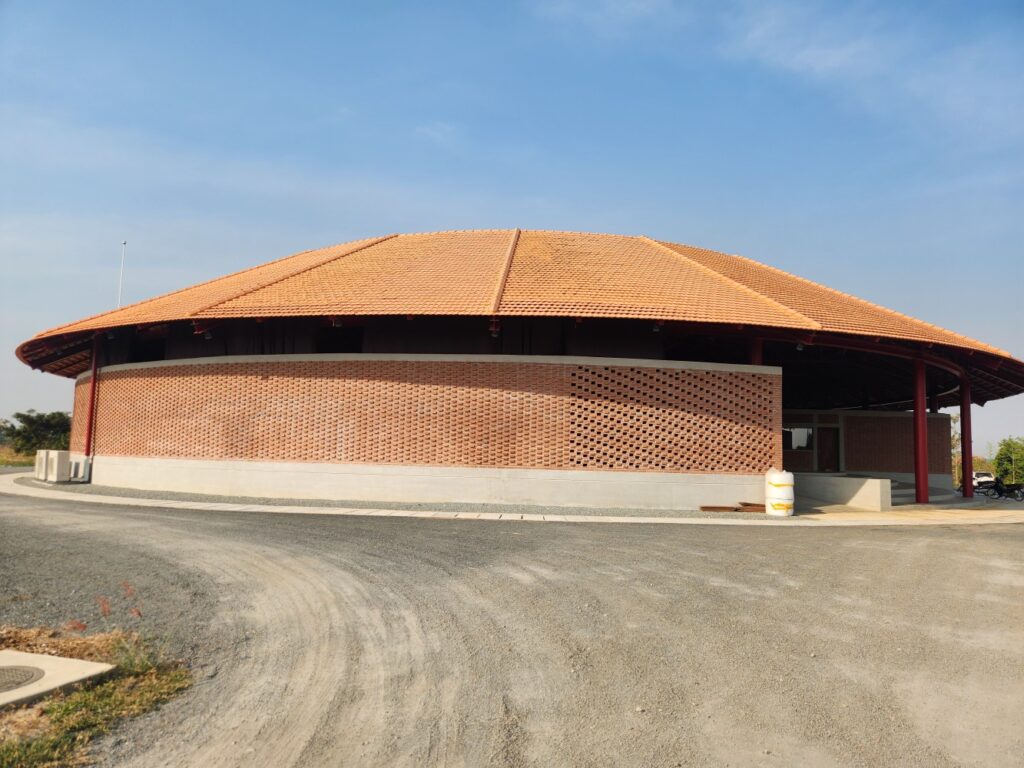
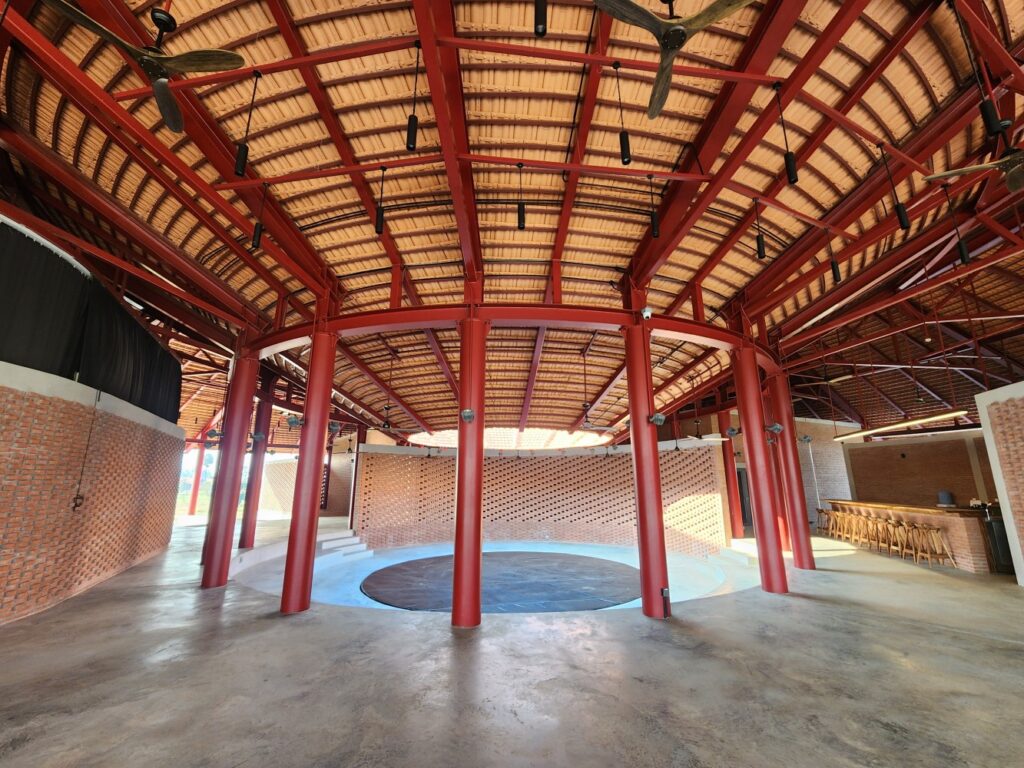
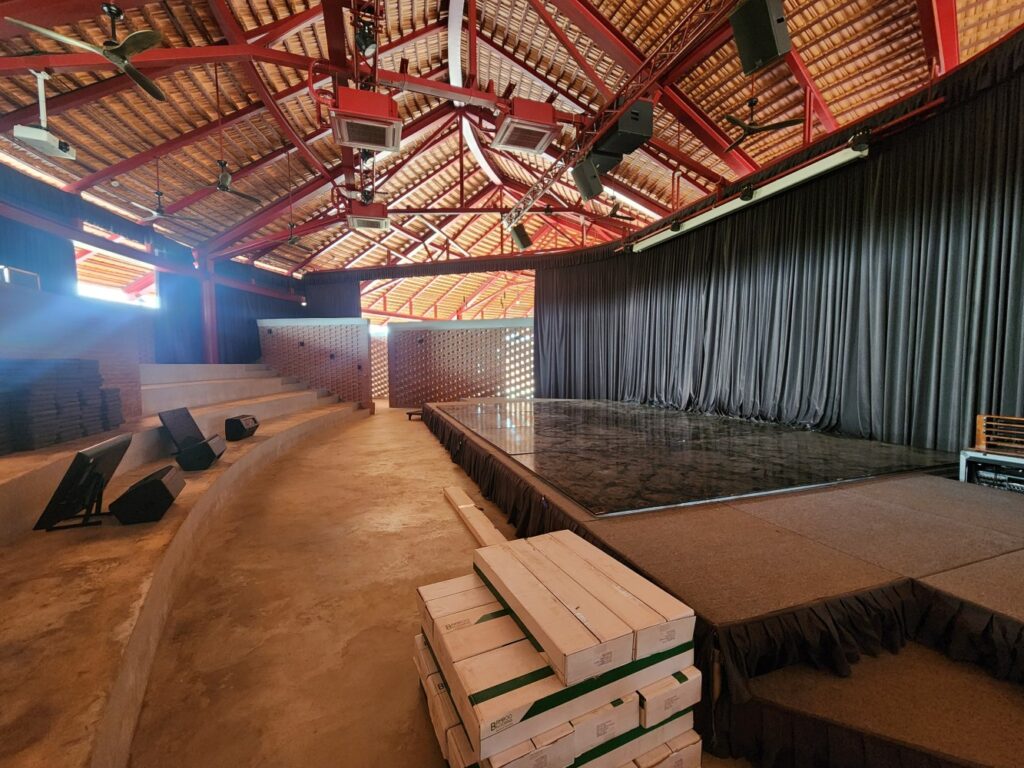
Recently completed in 2024, The Gong is an artfully designed arts and performance space that now has the ambitious task and responsibility to create and hold space for Cambodian art and culture to thrive again. Students at the school have the rare opportunity to learn and put up performances, and the venue is open to national and international artists on a commercial basis – all profits go towards the School and the project. Here is the link to a stunning music video recorded and shot at The Gong, by local singer Kesorr and rapper Roxy: https://youtu.be/zIJ_x27mFuo?si=7qtipkb6rQYUN8Q_
Exterior of The Gong, aptly named so to symbolise the growing impact that projects like Smiling Gecko can have. (taken by Shyn Yee Ho-Strangas)
The centre of the Gong which also channels rainwater to be used for other purposes. (taken by Shyn Yee Ho-Strangas)
The auditorium which can accommodate up to 140 people for live performances. (taken by Shyn Yee Ho-Strangas)
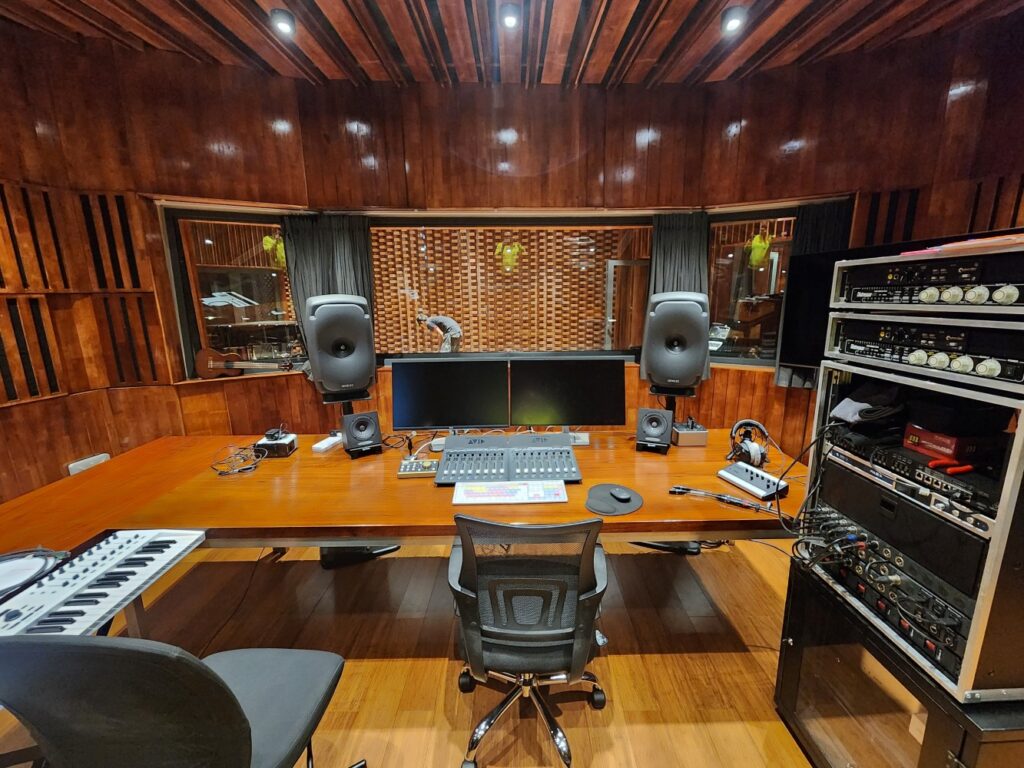
A state-of-the-art recording studio equipped to international standards, and run by a local tech team! (taken by Shyn Yee Ho-Strangas)
If you are still reading at this point, I must thank you for your patience and your curiosity! This is truly an incredible project and I would highly encourage you to visit with your family and friends, and perhaps even consider a team offsite with your colleagues whether as a leadership meeting or as a community outreach project. There is lots to do, lots to learn, and many ways to get involved – such as spreading the word.
As promised above, here are some more pictures from other parts of the project!
Inside one of the green houses. One could just pluck the produce straight from farm to table. (taken by Shyn Yee Ho-Strangas)
More farms and more green for our city dwellers! (taken by Shyn Yee Ho-Strangas)
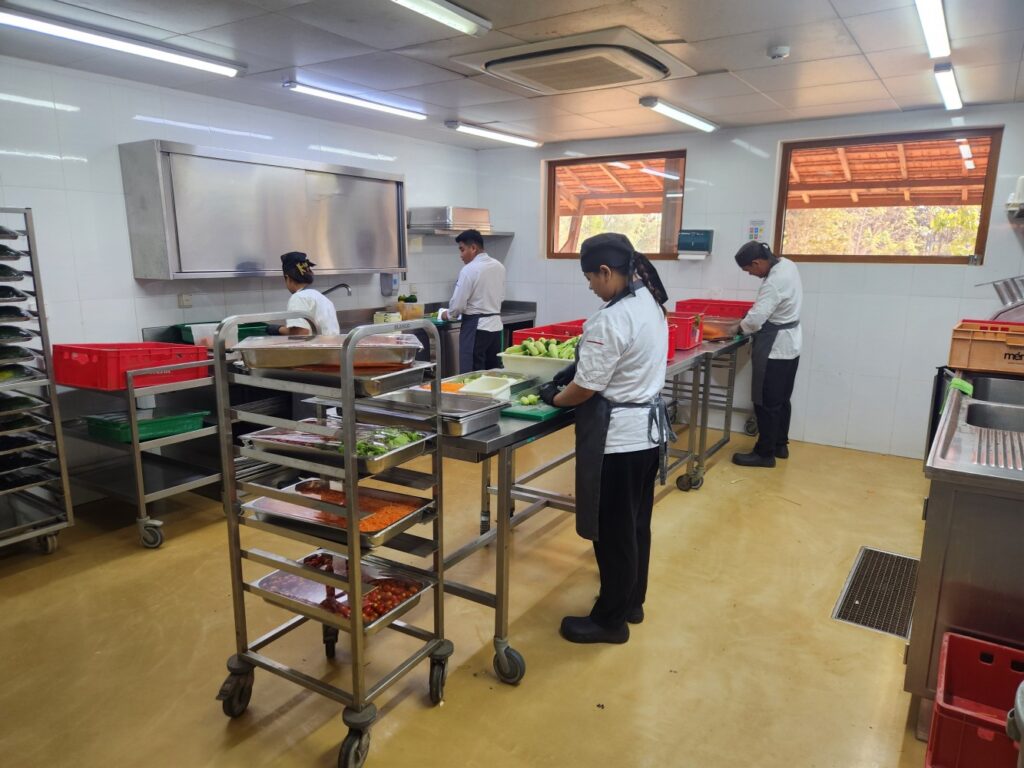
All hands on deck in the Staff Kitchens to prepare 2,700 meals a day (taken by Shyn Yee Ho-Strangas)
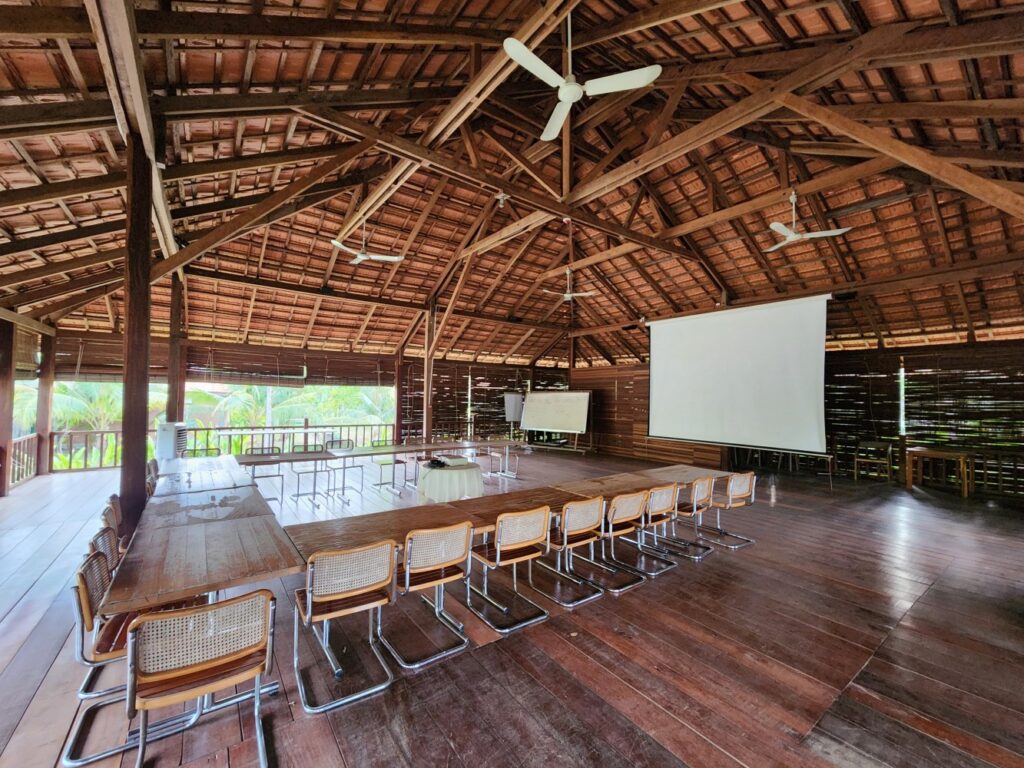
I can imagine this space for a leadership offsite, wellness retreat or a free form performance jam. (taken by Shyn Yee Ho-Strangas)
Shyn Yee Ho-Strangas 何勋谊
Smiling Gecko SG Board Member
Director of Horwath HTL